
Pierce County Criminal Court Records
A criminal court record is the case file the court keeps once a prosecution reaches the court system. It is broader than an arrest record. A Pierce County criminal court record can include the charging document, court docket, bond orders, arraignment entries, motions, hearing notices, plea documents, verdict entries, sentencing orders, probation terms, fines, restitution, and appeal activity. The record follows the case from filing to outcome.
Superior Court is the primary trial court for felony criminal cases in Pierce County and sits in the Waycross Judicial Circuit. State Court handles misdemeanor and traffic matters, with a local State-Misdemeanor and Traffic deputy clerk and Solicitor-General. Magistrate Court may appear early in the criminal path because it handles warrant applications, preliminary hearings, and certain first-step proceedings, but the full felony or misdemeanor court file is maintained through the trial court record.
The charge itself is only one part of the criminal file. A closer look at the charge list, statute field, warrant number, and arrest-to-charge path belongs with Pierce County arrest records and court charges.
Search Pierce County Criminal Court Records
Pierce County does not publish one free county-built search that shows every criminal case file. Georgia Courts e-access directs users to provider websites and notes that account access is required for court-record searches. Pierce County links Superior and State Court e-filing and document functions to PeachCourt. Certified copies, older paper files, and records not found through a provider should be requested through the Clerk of Superior Court.
- Identify whether the matter is a felony in Superior Court or a misdemeanor in State Court.
- Check the linked provider path for account-based criminal case or document access where available.
- Use the defendant name, case number, approximate filing year, and court type to narrow the record.
- Review the docket entries for charges, arraignment, motions, pleas, hearings, disposition, sentence, and appeal status.
- Call the Clerk of Superior Court at 912.449.2020 for public availability, copy fee, certification fee, and mailing or counter instructions.
The Waycross Circuit Public Defender page identifies the local defense office serving the circuit. Its role is not a record search portal, but it is relevant when a defendant needs case-status, hearing, eligibility, or record-restriction guidance through counsel.

Defense eligibility is separate from public record access, so criminal record requests still route through the clerk or official provider.
Pierce County Criminal Case Flow
A Pierce County criminal case can start with an arrest, warrant, accusation, or indictment, then move into formal court events. The docket records each court event. Some steps are public, some may be sealed, and some may be limited by juvenile or restriction rules. The prosecutor's office matters too: the District Attorney handles Superior Court felony prosecutions, while the Solicitor-General handles State Court misdemeanor and traffic prosecutions.
Case flow: Charges Filed › Arraignment › Pretrial / Motions › Plea or Trial › Disposition › Sentencing
| Stage | What Happens |
|---|---|
| Charges filed | An accusation, indictment, warrant-related filing, or other charging paper brings the alleged offense into court. |
| Arraignment | The defendant is called before the court, the charge is addressed, and a plea may be entered. |
| Pretrial / motions | Attorneys file requests, raise evidence issues, seek continuances, or prepare for plea or trial. |
| Plea or trial | The case resolves by plea, dismissal, trial verdict, or another court-approved outcome. |
| Disposition | The docket states the outcome for the case or for each charge. |
| Sentencing | The court records jail or prison time, probation, fines, costs, restitution, or other conditions if there is a conviction. |
Pierce County Criminal Record Fields
The research did not locate a public no-login Pierce County criminal case sample, so the inventory comes from the court-record research and the visible jail roster charge fields. Criminal records can vary by court and case age. Superior felony files may show indictments and sentencing orders, while State Court files may show accusations, misdemeanor pleas, traffic-related entries, fines, or payment status.
| Field | What It Shows |
|---|---|
| Case number | The court file number assigned by Superior Court, State Court, or the provider workflow. |
| Defendant | The person charged in the criminal case, distinct from civil party labels. |
| Charge | The alleged offense, statute, count, warrant number, accusation, or indictment item tied to the case. |
| Bond | Release security or bond terms when posted in the court or jail-related record. |
| Plea | The defendant's response, such as guilty, not guilty, or nolo contendere. |
| Disposition | The outcome, such as guilty, dismissed, acquitted, nolle prosequi, or other court action. |
| Sentence | Jail, prison, probation, fines, restitution, conditions, or release-related terms after conviction. |
| Restriction or seal | Any court order, statutory limit, juvenile rule, or record-restriction issue that affects public view. |
Pierce County Charges vs Convictions
A charge is an allegation filed into the court record. A conviction is an outcome after a guilty plea, verdict, or other qualifying adjudication. Pierce County criminal court records can show charges that were amended, reduced, dropped, dismissed, or resolved differently by plea. Do not read a charge list as a conviction list.
| Point | Charge | Conviction |
|---|---|---|
| Meaning | An alleged offense filed by warrant, accusation, information-style filing, or indictment. | A final guilty outcome by plea or verdict. |
| Where seen | Booking fields, charge details, accusation, indictment, or docket entries. | Disposition, sentence, judgment, probation, fine, or appeal entries. |
| Can change | May be amended, reduced, dismissed, or nolle prossed. | Can be appealed, corrected, restricted, or otherwise affected by later court action. |
| Record use | Useful for case tracking but not proof of guilt. | Useful for outcome review, subject to restriction and reporting rules. |
Pierce County Criminal Court Offices
The Prosecuting Attorneys' Council lists Marilyn Bennett as District Attorney for Pierce County felony prosecutions through the Waycross Judicial Circuit. It lists Adam Ferrell as Solicitor-General for State Court misdemeanor and traffic prosecutions. Victim-contact, prosecution-status, indictment, accusation, plea, and sentencing questions should start with the office tied to the court named on the record.
The PAC Pierce County prosecutor listing is the official statewide source for prosecutor names and contact details. It helps distinguish Superior Court felony prosecution from State Court misdemeanor or traffic prosecution.

For public copies of filed criminal court records, the prosecutor listing does not replace the Clerk of Superior Court copy process.
Public Access to Pierce County Criminal Records
Adult criminal case files are generally public when no law, court rule, or order restricts them. Georgia's Open Records Act, O.C.G.A. 50-18-70 et seq., supports access to many government records. Court files also follow court access rules, including Uniform Superior Court Rule 21 for sealing and access. Criminal-history record restriction is addressed through O.C.G.A. 35-3-37.
For Pierce County Superior criminal copies, the county fee material lists $0.50 per page and a $5 certified-copy add-on. Certified copies should be requested from the Clerk of Superior Court with the case number, defendant name, approximate filing year, record type, and the reason certification is needed. If a record involves a juvenile, sealed case, restricted history, active investigation, or protected identifier, access may be limited or redacted.
Note: Georgia record restriction limits public access in qualifying cases; it does not erase every court or agency record.
Sealed vs Expunged Records
Georgia sources use record restriction more often than expungement for criminal-history access limits, so Pierce County users should confirm the exact legal term before filing. Sealing is a court access limit that can hide all or part of a court file from the public. Restriction under O.C.G.A. 35-3-37 can limit public or non-criminal-justice access to qualifying criminal-history records. The exact route depends on the charge, disposition, prosecutor, court, and statutory category.
| Point | Sealed | Expunged / Restricted |
|---|---|---|
| Main effect | Limits public view of a court file or filing. | Limits public or non-criminal-justice access to qualifying criminal-history records. |
| Authority | Court order and court access rules, including Rule 21 procedures. | Georgia record restriction law, including O.C.G.A. 35-3-37. |
| Who may still see it | Authorized parties, court, or agencies depending on the order. | Criminal-justice agencies may retain access where the law allows. |
| Pierce filing point | The court that holds the file, usually Superior or State Court for adult criminal cases. | The court, prosecutor, Sheriff's Office, or GBI/GCIC path may matter based on record type. |
Pierce County Criminal Case Context
Recent official releases show why case source matters. State prosecution news can involve Pierce County allegations, while federal releases belong to the Southern District of Georgia rather than the county court system. County criminal court records are not in PACER unless a matter is federal, removed, or related to federal litigation. Local felony and misdemeanor case files remain with the Georgia trial courts.
The U.S. Attorney Southern District overview describes the federal district serving southeast Georgia. It is useful for federal criminal context, but state Superior Court and State Court records are handled through Pierce County and Georgia trial-court channels.
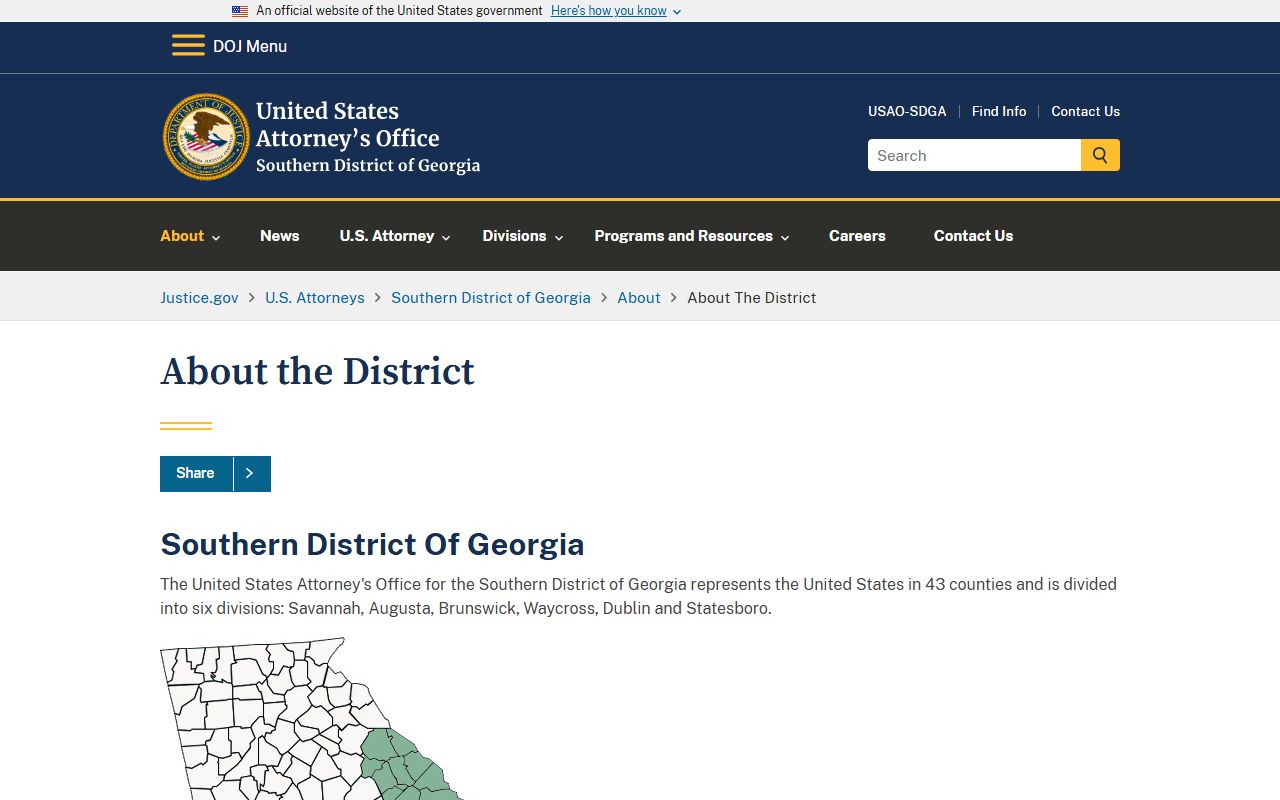
Federal criminal cases use federal dockets and federal clerks, while Pierce County criminal court records use local Georgia court offices and providers.
A 2026 Georgia Attorney General release announced an indictment involving a Pierce County defendant. It illustrates how an indictment is a charging event, not the full final court record.
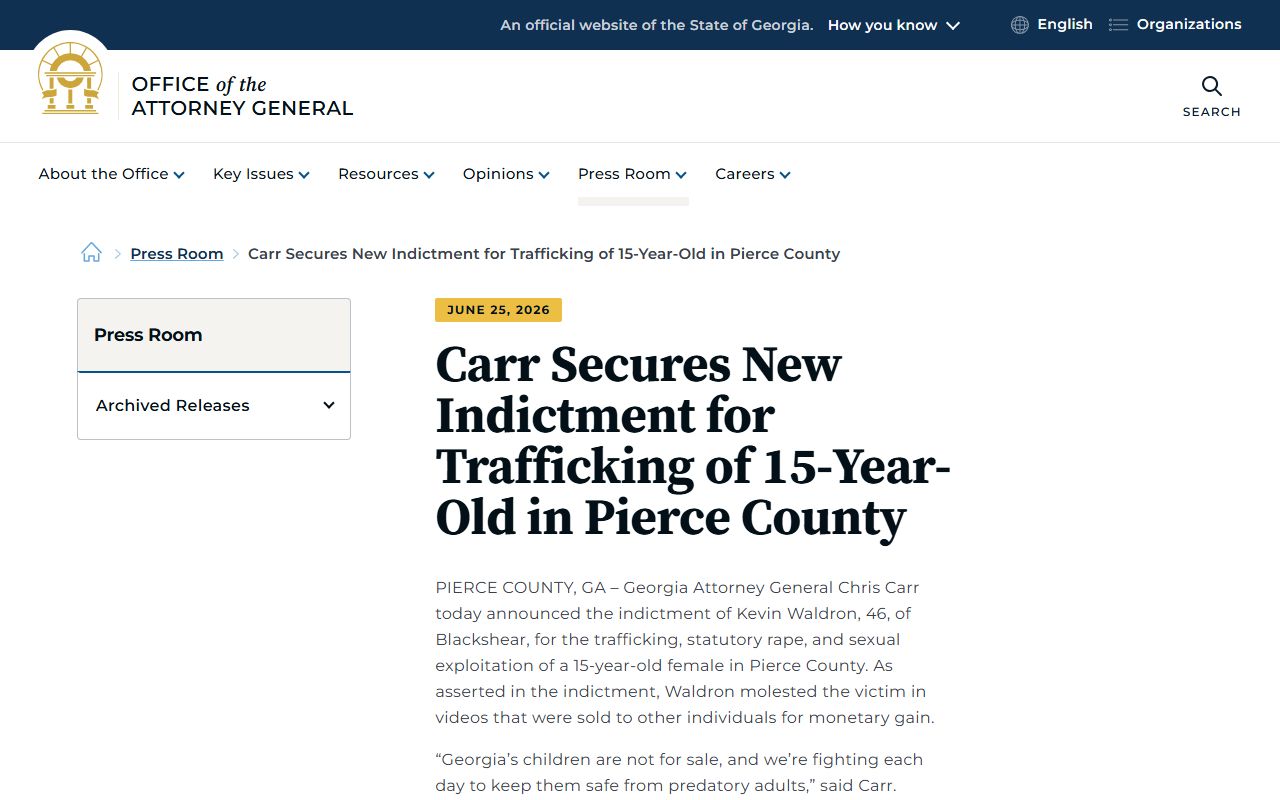
After an indictment, the criminal court file is still read through later docket activity such as arraignment, motions, pleas, trial, disposition, and sentence.